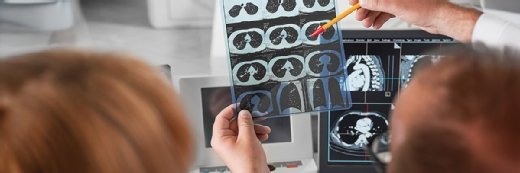
Minerva Studio - stock.adobe.com
Beyond telesurgery: How Proximie uses AI to optimise surgery logistics
AWS customer Proximie delivers AI-driven operating theatre logistics and tele-surgery. We spoke to its engineering vice-president about the challenges of cloud in a life or death environment

In the high-stakes environment of the operating theatre, the surgeon’s steady hand (or the robotic scalpel) is literally the sharp end of the process. But in their train lies the invisible grind of hospital logistics, where incredibly valuable surgery resources are often deployed less than optimally as humans try to apply subjective estimation to theatre scheduling and planning.
For years, the promise of digital health has been synonymous with telepresence, often in the form of a “Zoom for surgeons” that allowed remote observation during procedures in the operating room.
But as healthcare moves into 2026, the focus is shifting to “intelligence-first” surgery. By treating the operating theatre as an “unbounded” problem that can be reasoned through at scale, technologists are solving the logistical challenges that have limited optimal working.
By utilising computer vision as an instrument of measure, and generative artificial intelligence (GenAI) as a tool for predictive scheduling, Amazon Web Services (AWS) customer Proximie is transforming the operating theatre from a black box into a data-rich environment.
We spoke to Proximie at AWS’s recent London Summit, and found out how the company manages 120TB (terabytes) of unstructured video data across a hybrid edge-to-cloud architecture, the technical guardrails they have built to protect patient data sovereignty, and why the future of surgery relies on AI becoming an invisible “texture” in the hospital environment.
The ‘hanging around’ problem
The starting point for Proximie isn’t surgery itself, but the five billion people worldwide who lack access to safe procedures.
Richard Carter, chief technology officer (CTO) at Proximie, argues that because building new hospitals and training staff takes decades, the key thing is to get more out of existing resources. “Healthcare is largely a logistics and communications challenge,” says Carter. “The time is not in getting surgeons to work faster; the time is to minimise the hanging around time.”
To solve this, Proximie uses ceiling-mounted sensors to create a statement of fact around operating theatre workflows. Unlike human recall, which Carter describes as fragile and subjective, computer vision provides an objective record of exactly when a patient enters the anaesthetic room and when they depart the procedure room. By removing sentiment from the discussion, hospitals can identify exactly where the “dead time” exists.
The predictive scheduler
This data collection allows Proximie to tackle one of the most difficult variables in hospital management – elective list scheduling. If a scheduler underestimates a procedure, the entire day’s list falls behind, putting immense pressure on staff. If they overestimate, valuable capacity is wasted.
By analysing three years of electronic health record (EHR) data, Proximie’s AI can now outperform human schedulers. It correlates variables that are often too complex for manual calculation, such as the statistical link between a patient’s body mass index, age and the specific surgeon-anaesthetist combination.
The real-world impact is significant. Thoracic surgeons at St Thomas’ Hospital in London have successfully added one extra major case per day simply by using this real-time data to tighten their schedules.
From ‘Zoom for surgeons’ to unbounded AI
During the pandemic, Proximie was often described as “Zoom for surgeons”. While telepresence was a vital off-ramp that normalised digital entry into the operating room, Carter explains that video access has now become a feature, not the product. The real challenge is the “unstructured” nature of video and audio data, which historically was impossible to process at scale.
“If you’re playing a game of chess, although it is very large, there is a finite number of chess positions,” says Carter. “With healthcare, it is absolutely infinite, because we are all unique as individuals.”
He defines healthcare as an unbounded problem, but 2026-era AI can finally reason around these infinite variables. The goal is for AI to become a texture within the hospital – an invisible layer that removes the “grunt work and grind” rather than acting as a standalone gadget.
Technical architecture – edge vs cloud
Managing 120TB of unstructured data globally requires a sophisticated hybrid model to navigate latency and data privacy.
Edge devices, mounted on the operating theatre ceilings, handle privacy at the source. They obfuscate and redact sensitive information on the device before any data leaves the room. Carter is adamant that no unobscured data ever leaves the operating room. Once redacted, the data is sent to the AWS cloud for massive, asynchronous processing. Carter argues that on-premise solutions are economically unviable because they lack the upgrade path and cross-system visibility that a cloud provider such as AWS offers.
Meanwhile, in real-time frame-by-frame analysis, certain procedures, such as laparoscopy – which is entirely hypothetical, says Carter – the system will only have 18 milliseconds to analyse a frame at 60 frames per second. This makes edge computing necessary for tasks where latency would have a practical impact.
The encryption moat
When operating across different jurisdictions, data sovereignty is a non-negotiable requirement. Proximie utilises AWS Global Accelerator to ensure data is routed and stored strictly within a user’s jurisdiction. “The user doesn’t have to decide where to put data,” says Carter. “The workflow obligates it.”
Addressing concerns regarding the US Cloud Act – which potentially allows US courts to demand data from US-headquartered companies – Carter offers a pragmatic technical defence.
While Proximie would comply with legal obligations, its encryption standards serve as a “shield”. He suggests that the data would be “inaccessible in the form in which it would be provided”, effectively rendering any legal surrender moot because raw, readable data remains technically impenetrable to outside parties.
Safeguarding against hallucinations
In a flesh-and-blood environment, the risk of AI hallucinations must be zero. Proximie manages this through a human-in-the-loop governance model. The AI provides recommendations, such as a “win of the day” or highlighting the greatest opportunity for efficiency, but it is never allowed to be executive.
Crucially, the system requires the AI to state its reasoning. It cannot just give a recommendation, but must show the specific data points used to reach that conclusion. This traceability allows theatre managers and clinicians – whom Carter notes are not shy about challenging colleagues – to maintain final control over the workflow.
The future of surgical logistics
As Proximie scales, the roadmap is focused on making AI even more of a background utility. By solving the core infrastructure and logistics questions that even the most skilled humans struggle with, the company aims to move closer to its mission of providing safe surgery for the five billion people currently without it.
The transition from a telepresence tool to an intelligence-first operating system is, in Carter’s view, the only way to meet the infinite demands of global healthcare. By leveraging the scale of the cloud and the privacy of the edge, the operating theatre is finally moving beyond the limitations of human recall and into an era of objective, data-driven efficiency.
Read more about AI use
- Digital twin of athlete’s heart to demonstrate future of healthcare: IT services firm opens a window to the future of healthcare and physical training as tech advancements converge.
- NHS could save millions of hours a year using AI, pilot shows: A Microsoft Copilot AI trial in 90 NHS organisations found that a national roll-out could save up to 400,000 hours per month.